China to Middle East Gulf Sea Freight
Short-haul full-container express from Shanghai and Ningbo into Jebel Ali, with onward feeder and direct calls along the Arabian coast and Red Sea gateways — the lane behind Gulf retail restocking and regional re-export programs.
FCL from China to Jebel Ali (AEJEA) typically sails 15–18 days port-to-port, with Saudi and wider Gulf calls generally in the 18–24 day range depending on the string and transshipment pattern (typical, varies by carrier and rotation). Jebel Ali is the hub: many wholesale boxes discharge there and either dray locally, cross-dock for GCC trucking, or re-export through the free-zone ecosystem.
The lane’s working rhythm is seasonal in a way Atlantic lanes are not: Gulf retail builds inventory ahead of Ramadan and the summer trade slows in extreme heat. Certification is the other gate — Saudi-bound consumer goods require conformity documents issued before shipment, so certification work has to start with the PO, not the booking.
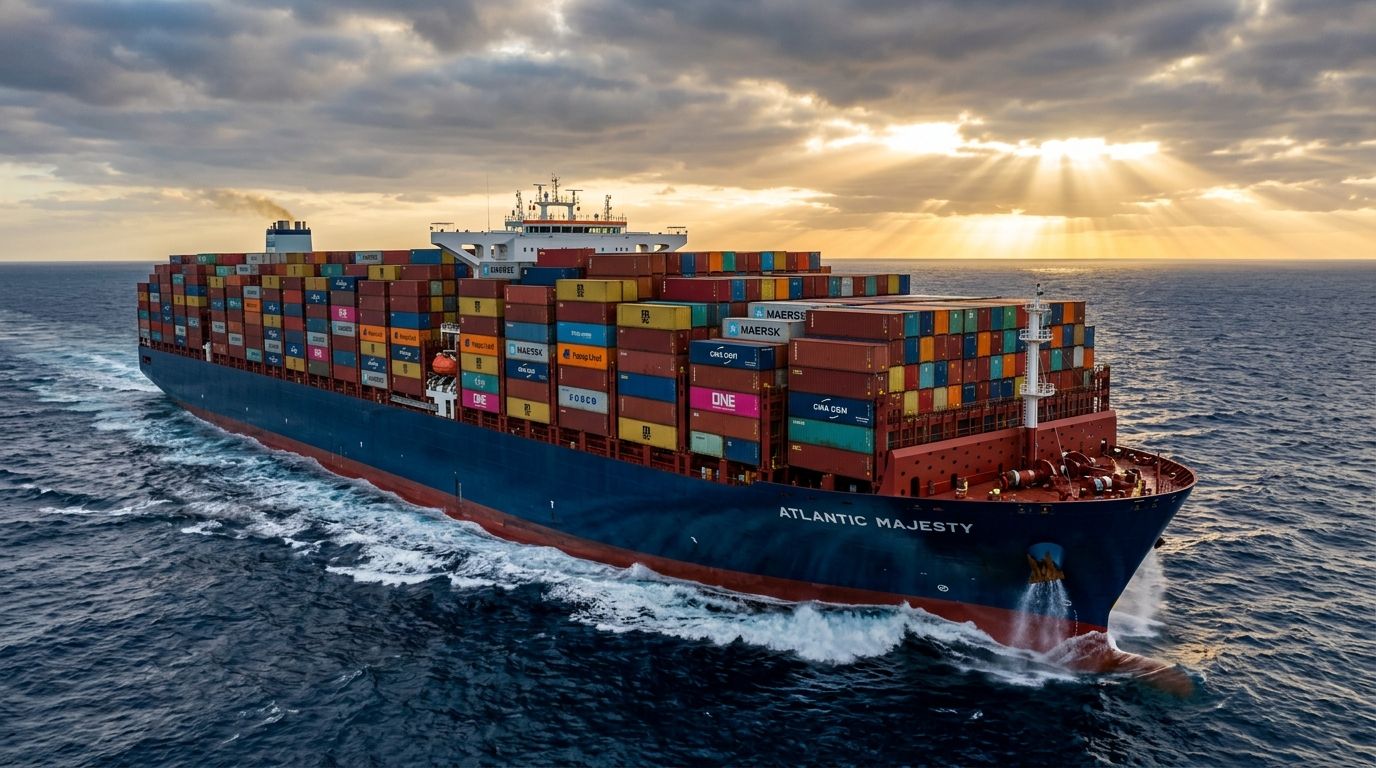
One Hub, Then a Coast of Options
Jebel Ali (AEJEA) is the lane’s center of gravity — the largest container port in the Middle East, sitting beside Dubai’s free-zone warehousing, with truck corridors into every GCC state and feeder sailings to smaller Gulf and Red Sea ports. Jeddah (SAJED) is the Red Sea gateway serving the Saudi west and the greater Saudi market’s western distribution. Dammam (SADMM) covers the Saudi east coast and the industrial corridor toward Riyadh via the King Fahd Causeway links into Bahrain (Khalifa Bin Salman Port, BHKBS) and Kuwait (Shuwaikh, KWKWI). Qatar is served primarily through Hamad Port (QAHMD) on direct or transshipped strings.
Wholesale buyers should pick the port by where cargo clears and sells. Saudi Arabia and the UAE are separate customs territories with separate importer registrations, certification regimes, and duty structures — a “one GCC entry” plan does not exist for a first-time container; the design is one clean entry per destination state.
| Port Pair | Typical Transit | Serves |
|---|---|---|
| Shanghai / Ningbo → Jebel Ali | 15–18 days | UAE, free-zone re-export |
| China → Jeddah | 18–24 days | Saudi west, Red Sea transshipment |
| China → Dammam | 19–25 days | Saudi east, Bahrain causeway |
| Jebel Ali → GCC feeders | 2–5 days | Doha, Kuwait, Oman, Bahrain |
Typical port-to-port ranges; actual transits vary by carrier, string, and Red Sea/Gulf routing conditions.
Certification and Heat: The Two Things That Define This Lane
Conformity before loading
Saudi-bound consumer and wholesale goods generally require certificates of conformity issued under the Saudi product-safety platform before shipment — obtained per shipment or per batch, depending on the product scope. These are commercial-licensing facts that change by product category; the working rule is to verify the required scheme with your Saudi importer or broker at PO stage, because certificates cannot be improvised after the vessel sails.
Heat-season cargo care
Containers crossing the Indian Ocean in Gulf summer routinely see extreme in-box temperatures. For furniture, adhesives, cosmetics-adjacent goods, and anything with plastics or finishes, specify desiccant, avoid moisture-reactive packaging, and prefer the cooler shoulder months when the sales calendar allows. Loading photos should record ventilation and bracing choices.
Importer registration per state
Each GCC destination requires its own importer registration with local customs — a UAE importer code does not clear cargo in Saudi Arabia and vice versa. Multi-state programs therefore book and enter per destination state, even when several boxes ride the same vessel.
What a China–Gulf FCL Quote Is Built From
- Base ocean freight per container — Gulf pricing is quoted with its own validity windows; Red Sea routing disruption reprices strings faster than Atlantic markets, so confirm validity before relying on a quoted figure.
- Origin charges — China base-port THC, booking and B/L documentation, export declaration, VGM, and trucking to the CY, itemized per container.
- Transshipment components — calls past Jebel Ali usually ride a hub transshipment; the through-quote embeds feeder or coastal legs, and destination handling appears separately.
- Destination charges — Gulf terminal handling, documentation, and any customs inspection items; free-time terms at Jebel Ali differ from Saudi ports, so confirm per discharge state.
- Certification costs — conformity certificates, where required, are a product-side cost that belongs in the landed model even though they do not appear on the freight invoice.
Figures are confirmed per booking — the structure above is what a comparable Gulf quote should contain, line for line.
Operating Pitfalls on This Lane
- Pre-Ramadan compression. Retail restocking compresses space and equipment into the weeks before Ramadan; book early and expect cut-offs to tighten, then plan clearance staffing around the holiday itself.
- Certification lead time. Missing conformity documents block clearance and can strand cargo; start certification with the PO and never treat it as a post-sailing errand.
- Red Sea variability. Security and transit conditions on Red Sea approaches change routing decisions for some strings; confirm the active rotation at booking and monitor it through sailing.
- Free-time assumptions. Jebel Ali and Saudi ports run different demurrage regimes; re-export programs especially need free days that survive a cross-dock schedule, not just a discharge week.
Planning a mixed-category Gulf container? Size it with the container fill planner and read the destination clearance methodology before your first entry.
Frequently Asked Questions
Should Gulf-bound cargo clear in Dubai or in the destination state?
Clear where the goods sell. Cargo sold into Saudi Arabia clears under the Saudi importer's registration with the required conformity documents; cargo that will be re-exported or distributed from a UAE free zone clears under the UAE structure. Splitting a program so some boxes clear in one state and some in another is normal — what fails is trying to serve both purposes with a single mixed container and one entry.
How does the pre-Ramadan peak change my booking practice?
Treat it like the transpacific Q4: space compresses into the weeks before the holiday, cut-offs tighten, and clearance staffing thins during the holiday itself. Book further ahead than usual, align container arrivals to land before the holiday pause, and confirm terminal working calendars at the discharge port for the holiday period.
Is Jebel Ali a good discharge port for cargo destined across the GCC?
For UAE and Oman distribution, and for free-zone re-export programs, yes — the port pairs the deepest sailing choice with dense cross-dock and trucking capacity. For Saudi Arabia specifically, compare direct Jeddah or Dammam calls against UAE discharge plus trucking: the direct call usually simplifies certification and entry even when its ocean line item is higher.
Request Commercial Ocean Freight RFQ
Submit your container shipment details to our Ningbo port desk for contracted space and spot carrier pricing within 12 hours.
Last reviewed: September 2026 — rotations and transit ranges are typical and confirmed per sailing; charges are itemized per booking.