China to Mediterranean FCL Sea Freight
Full-container loops from China through the Suez Canal into the East and West Mediterranean gateways — Piraeus, Genoa and La Spezia, Valencia and Barcelona, and Malta’s Marsaxlokk hub — serving Southern Europe, the Balkans, and North Africa-bound distribution.
FCL from China to Mediterranean ports typically sails 25–35 days port-to-port depending on the gateway and loop — East Mediterranean calls such as Piraeus sit at the shorter end, West Mediterranean calls such as Valencia and Barcelona at the longer end (typical, varies by carrier, rotation, and Suez transit conditions). Mediterranean gateways are EU ports: the same ENS filing and EORI framework as North Europe applies, with onward bonded transit for inland clearance.
Wholesale volumes on this lane are dominated by 40GP and 40HQ boxes of furniture, building materials, and household goods feeding Southern European and Balkan DCs. Feeder connections from Malta and Piraeus extend the network to smaller Adriatic, Levant, and North African ports on a secondary schedule.
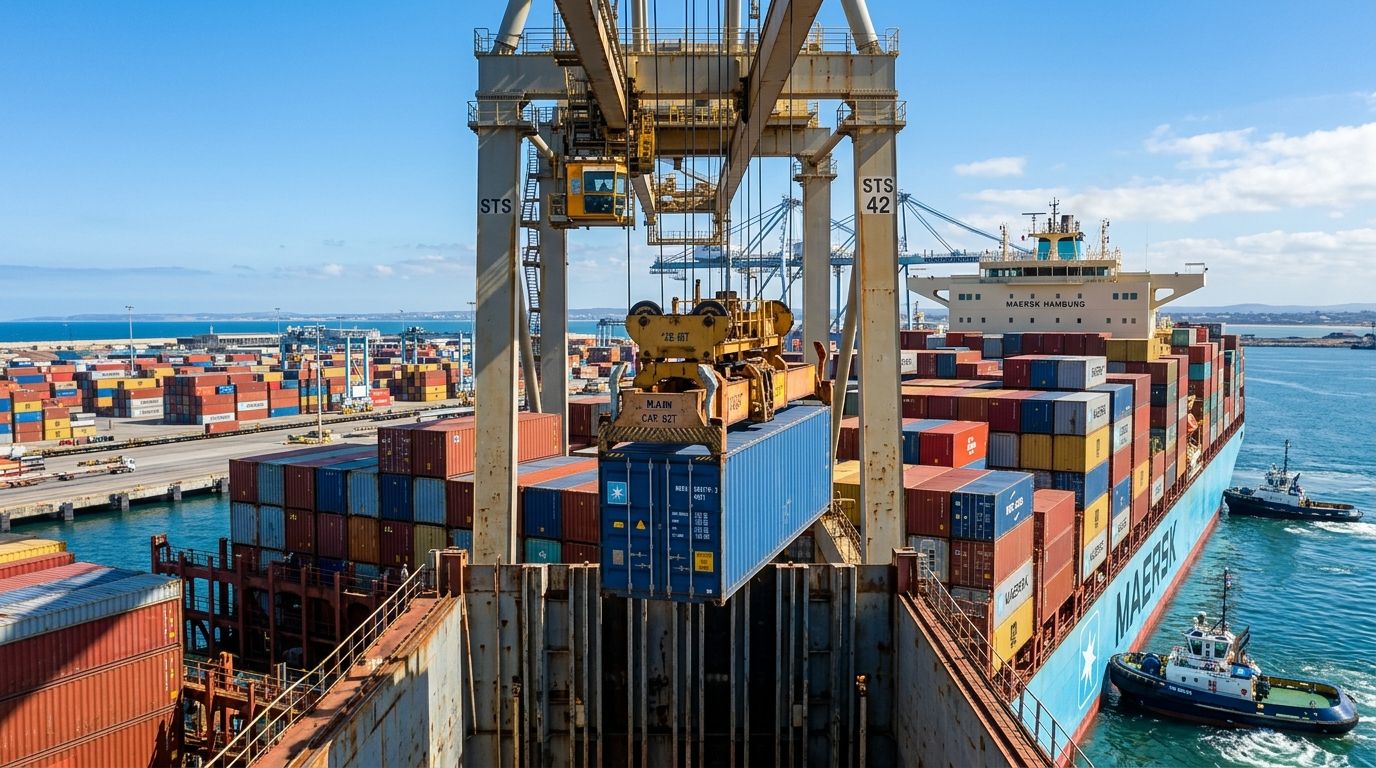
How the Mediterranean Gateways Divide the Work
Piraeus (GRPIR) is the East Mediterranean workhorse: a major alliance transshipment and discharge port with strong rail links toward the Balkans, Central Europe, and the Greek hinterland. Genoa (ITGOA) and La Spezia are the Italian gateways, with Genoa handling most direct China calls and good rail reach into northern Italy’s industrial belt. Valencia (ESVLC) and Barcelona (ESBCN) serve Spain and the Iberian market and connect onward to the Balearics and Canaries by feeder. Marsaxlokk (MTMLA) in Malta functions mainly as a transshipment hub where mainline vessels exchange boxes with regional feeders — wholesale cargo destined past the main calls often rides a mainline-to-feeder connection through it.
Unlike the single delta market of North Europe, the Mediterranean is a chain of separate national markets. The right discharge port is the one nearest your DC network: crossing the Med by truck after a wrong-gateway discharge costs more than any ocean-side saving.
| Port Pair | Typical Transit | Serves |
|---|---|---|
| Shanghai / Ningbo → Piraeus | 25–30 days | Greece, Balkans, Central Europe rail |
| East China → Genoa / La Spezia | 27–33 days | Italy and southern France |
| Shenzhen / Shanghai → Valencia / Barcelona | 28–35 days | Iberia and onward feeder markets |
| China → Marsaxlokk (hub) | 24–30 days | Feeder connections to regional ports |
Typical ranges including Suez transit; actual schedules vary by carrier, rotation, and canal conditions.
FCL vs LCL, Feeding, and the Suez Variable
FCL vs LCL. Mediterranean LCL works for sub-10 CBM orders into the big gateways, but groupage boxes deconsolidate at a CFS and re-feed onward — adding a handling layer and a second schedule. Wholesale buyers consolidating multiple suppliers should compare LCL against a buyer’s consolidation into their own FCL box (process here), which loads once at origin and drays directly to the destination DC.
Feeder reality. Boxes destined past the mainline calls ride a transshipment — typically via Marsaxlokk or Piraeus. Transshipment adds handling and a feeder sailing; it is the norm for Adriatic and smaller Iberian ports, and transit ranges in those cases should be quoted door-relevant, not mainline-only.
The Suez variable. Transit ranges on this lane assume normal canal transit. Suez delays, convoy restrictions, or rerouting via the Cape of Good Hope add substantial time and change the economics of the loop — during such periods, wholesale buyers should re-quote rather than assume published schedules, and give clearance paperwork extra lead time since arrivals bunch when strings re-sync.
Operating Pitfalls on This Lane
- August and holiday shutdowns. Southern European receiving calendars empty in August and over Christmas; a container arriving into a closed warehouse burns free time at the terminal.
- Wrong-gateway discharges. Trucking across the Med basin is expensive and slow; select the discharge port by DC location before booking, not by the lowest ocean line item.
- Transshipment drift. Feeder misconnections at hub ports quietly add a week for secondary ports; build the full routing into the delivery promise.
- Heat exposure in summer. Containers crossing equatorial waters in summer see high in-box temperatures; heat-sensitive goods need desiccant and ventilation planning and should avoid mid-summer stuffings where possible.
- ENS data quality. Mediterranean first-port entries follow the same EU pre-arrival filing environment as the north — mismatched house/master data triggers holds at the first call.
What a China–Mediterranean FCL Quote Is Built From
- Base ocean freight per container — mainline calls price differently from feeder-served ports; transshipment destinations carry a through-rate that embeds the feeder leg.
- Canal and fuel items — Suez-related cost components appear either embedded or as pass-throughs; ask which, because canal disruption periods reprice them fastest.
- Origin charges — China base-port THC, booking and B/L documentation, export declaration, VGM, and trucking to the CY.
- Destination charges — Mediterranean terminal handling, ISPS and documentation items, plus onward rail or truck legs; transshipment boxes may see handling items at the hub.
- Free time and per diem — each national terminal regime sets its own clocks; confirm free days for the actual discharge port, not the string average.
Structure is published here; figures are confirmed per booking. Mediterranean pricing moves with Suez conditions and European seasonal demand, so every element is quoted line by line with a validity window.
Entry practice reminder
Mediterranean EU ports use the same customs framework as the north: an EORI registration on the EU side, ENS data quality checks before arrival, and a choice between port clearance and bonded transit to an inland office. The methodology is laid out in the destination clearance process.
Frequently Asked Questions
Which Mediterranean port should I choose for Balkan distribution?
Piraeus is usually the strongest gateway for Balkan and Central European reach, combining direct China calls with onward rail corridors. Compare it against Genoa for Adriatic-side destinations; when the final market is served by a feeder rather than a mainline call, ask for the full through-routing — including the transshipment port — so the transit promise matches reality.
What happens to transit times when Suez is disrupted?
Rerouted strings via the Cape of Good Hope add well over a week to Mediterranean rotations, and congested canal periods bunch arrivals afterward. During disruption windows, treat published schedules as approximations, re-quote the shipment, and shift delivery promises out accordingly rather than absorbing the delay downstream at your DC.
Is LCL into Mediterranean ports a bad idea?
It is not wrong — it is a different product. Groupage suits genuinely small volumes into major gateways. The wholesale trap is using LCL for cargo that is really a partial container: deconsolidation, storage at a CFS, and re-feeder legs add cost and handling. Model the volume with the container fill planner; near half a 20GP or more, your own consolidated FCL box is usually the cleaner structure.
Request Commercial Ocean Freight RFQ
Submit your container shipment details to our Ningbo port desk for contracted space and spot carrier pricing within 12 hours.
Last reviewed: September 2026 — rotations and transit ranges are typical and confirmed per sailing; charges are itemized per booking.