Shipping Wholesale Textiles & Apparel by FCL
Textiles are the quiet specialist category in ocean freight: chemically sensitive to humidity, physically flexible in loading, and administratively heavier than their weight suggests — labels, origin documents, and destination measures all attach to this cargo.
Apparel and textiles ship three ways in containers: carton-loaded folded goods (the volume default, stacked high in 40GP/40HQ), compressed bales for fabric and greige goods (dense, floor-loaded, moisture-monitored), and garment-on-hanger (GOH) boxes with special hanging rails for pressed garments that must arrive sellable without re-pressing. Cartons and bales plan on standard cube math; GOH equipment and its lower density are a merchandising decision, not just a freight one.
The category's signature risk is mildew: natural fibers and their blends absorb moisture and mold in transit, so desiccant capacity, breathable packaging, and dry-carton discipline are non-negotiable on long voyages. The signature paperwork is consumer regulation — fiber-content and care labeling rules in the US and EU attach at retail, so labels are verified at the pre-shipment inspection, and origin documentation is confirmed per destination before sailing.
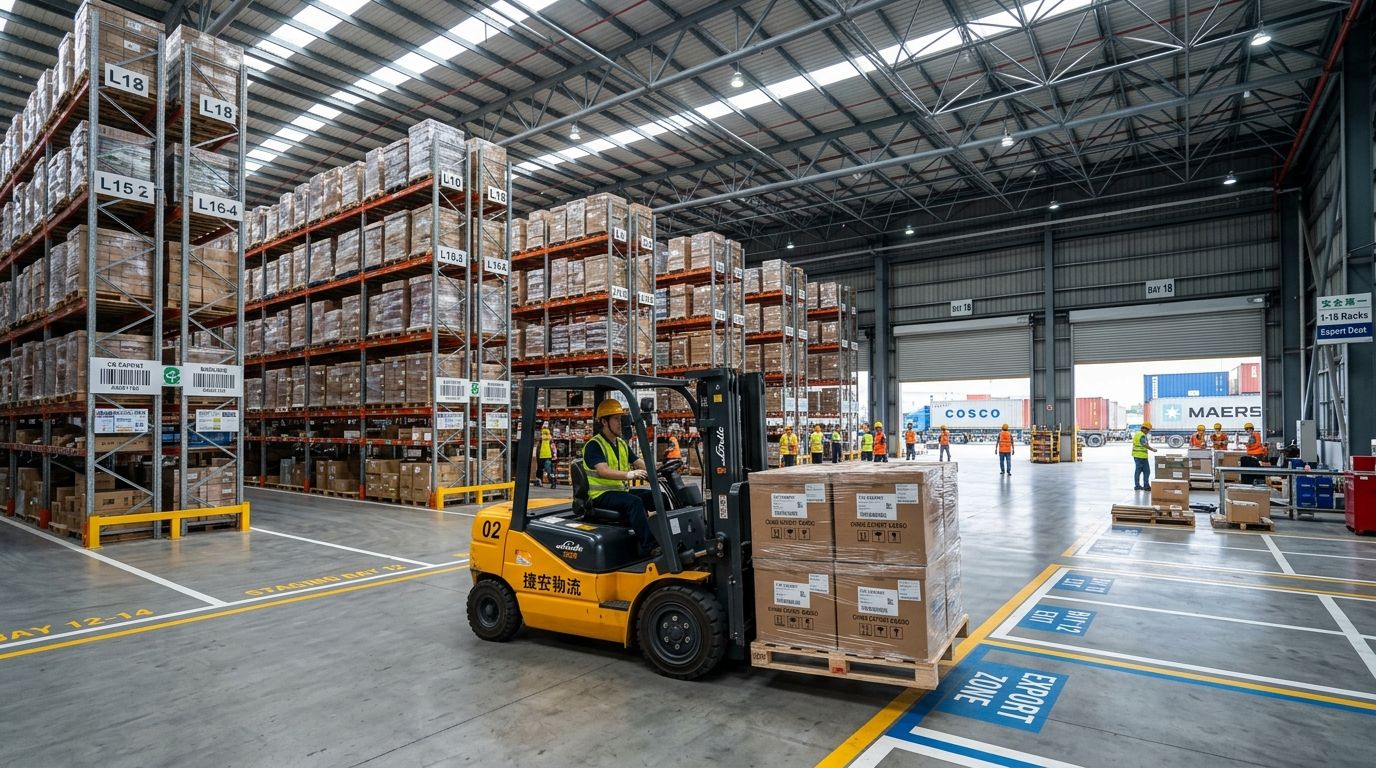
Three Loading Modes, Three Plans
Carton-loaded apparel is standard cube cargo: poly-bagged folded units in cartons, floor-loaded in interlocked stacks or palletized for warehouse receiving — model at 85% floor-load or 78% palletized efficiency in the container fill planner. Cartons for garments are often oversized for their contents; pushing the stated carton CBM against the box capacity is fine, but real stacking strength limits how high soft cartons go — top-board soft loads to keep the upper layers from crushing the lower ones.
Compressed bales of fabric, greige goods, or waste textiles behave like dense cargo: heavy, squarish, and floor-loaded with weight spread evenly. Bales must be dry before loading — moisture sealed inside a bale has forty days of voyage to become a claim — and bale wrapping takes the abrasion of the whole load, so wrapped bales and edge protection matter.
Garments on hanger (GOH) ride in containers fitted with hanging systems — special equipment booked by name, with materially lower density per meter of rail. GOH is chosen when re-pressing at destination would cost more than the freight difference: high-value pressed garments, retail-ready programs with tight rack dates. It is ordered like a reefer, not improvised like a pallet.
Mildew Prevention, In Order
- Dry goods at packing. Humidity at the factory is the moisture that rides along; goods packed dry start the voyage clean. Seasoned buyers schedule stuffing for the driest part of the day in humid months.
- Desiccant sized to the voyage. Natural-fiber loads get more desiccant capacity than mixed goods, distributed through the stack rather than dumped at the doors.
- Breathable packaging. Poly bags vent, cartons lined with moisture-barrier paper where walls contact goods; fully sealed bags trap condensation against the garment.
- Dye-lot discipline. Mildew and color variation are batch problems — keep dye lots identified in the load plan so a problem found at receiving maps to a claimable batch, per the inspection methodology.
Documents and Compliance Notes for Textile Imports
Fiber-content and care labels
Consumer markets regulate textile labeling — fiber percentages, country of origin, and care instructions appear under the US textile labeling statute and the EU’s textile labeling regulation (Regulation (EU) No 1007/2011). Labels are checked at the pre-shipment inspection; mislabeled goods are a destination-market problem that relabeling rarely fixes cheaply.
Destination trade measures
Certain apparel and textile lines carry destination-specific measures that change by HS code and by origin — several markets have applied trade remedies to Chinese textile categories over the years, and coverage evolves. The standing instruction for wholesale programs: screen the category with the destination broker at PO stage and again if the product mix changes.
Origin documents
Certificates of origin are issued before sailing; buyers requiring a general CO or a destination-specific form should request it during the export declaration window, not after departure — origin documents issued retrospectively rarely satisfy destination requirements, and textile entries are exactly where customs checks them hardest.
FCL vs LCL, and the Consolidation Habit
Textile apparel consolidates beautifully — cartons from multiple garment factories load one 40HQ without engineering — which is why multi-supplier apparel programs standardize on buyer’s consolidation ( process here) rather than LCL groupage. LCL’s honest use in this category is small sample runs and photo-sample shipments, where speed matters more than the destination CFS fees. One caution applies either way: textile cargo should never share space with leaking or strongly odored goods — in LCL you do not choose your box-mates, which is itself an argument for the full container.
Frequently Asked Questions
When is garment-on-hanger (GOH) equipment worth it?
GOH earns its premium when garments must arrive retail-ready and re-pressing at destination would cost more than the equipment difference — pressed suits, dresses, and similar high-value lines with rack dates. For everything foldable, carton-loaded 40HQ remains the efficient default. GOH is special equipment booked by name, so decide at booking stage, not at the warehouse door.
How much desiccant does an apparel container need?
Sizing follows the cargo's own moisture behavior and the voyage, so it is confirmed per shipment: natural fibers and blends absorb more and get more capacity, distributed through the stack; fully synthetic loads need less. The non-negotiables are dry goods at packing, breathable packaging, and desiccant actually fitted — recorded in the loading survey photos so a moisture event is provable rather than debatable.
Do I need a certificate of origin for every textile shipment?
Whether a CO is required depends on the destination market and your buyers' commercial requirements — some entries proceed without one, others are difficult without it, and buyers using preference programs need the specific form. The working rule: decide origin documentation during the export-declaration window, request issuance before sailing, and let the destination broker confirm which document the entry will demand.
Request Commercial Ocean Freight RFQ
Submit your container shipment details to our Ningbo port desk for contracted space and spot carrier pricing within 12 hours.
Last reviewed: September 2026 — equipment selection, moisture sizing, and labeling requirements are confirmed per shipment and destination market.